
Shihan Mike Jeans 8th Degree

Referenced from the foreword for Shihan Mark Haseman’s “Tohkon Ryu Jujitsu – Manual”.
As a youngster going to primary school two of my favourite comics were the Phantom and the Shadow. The Phantom was a saga, good over evil and he also was able to overcome multiple attackers. The Shadow was also a hero but in all the episodes when he overcome an attacker the technique was always written in Japanese. The attacker lunged at him with a short stick but was thrown with Ippon Seoi Nage (Shoulder Throw). There was also a radio serial I listened to about the British Secret service and the hero again used Jujitsu to protect himself. However in one episode he was stabbed in the arm fighting off some attackers and had to rely on his Jujitsu ability using only one hand. As I recall we used to do this when I was instructing at the Inala PCYC.
At Primary school when the occasional fight occurred, you would try some of the techniques you saw in the comics, like Tome Nage. I always preferred fighting on the ground as I had more success.
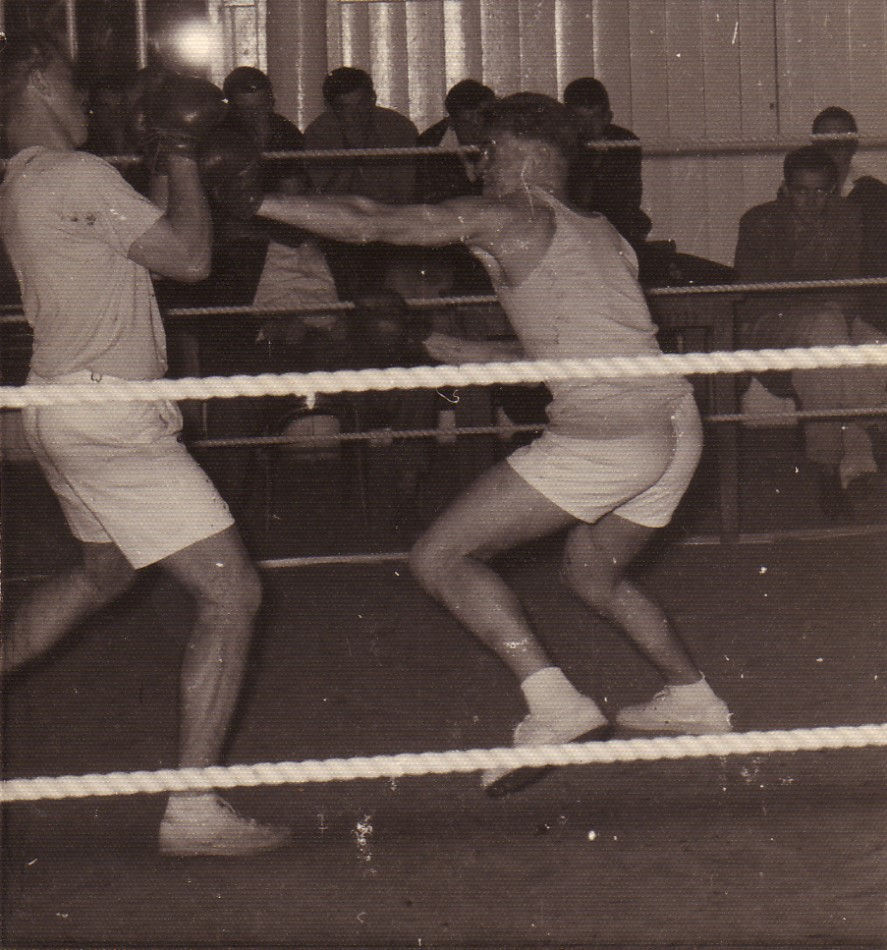
After leaving High School in 1956 I was in Lismore and at the local gym you could learn wrestling. I trained there three nights a week for two years and during this time one of the instructors had been with the Occupation force in Japan and had learnt both Judo and Jujitsu techniques, but was called unarmed combat. We often did defence against a knife and baton and two to three attackers.

All the throws we did were without judo gis or shirts. In groundwork, various arm locks, leg locks, holding techniques, strangles and pressure points were shown. During this time I won two wrestling championships.
During 1959 and 1960 I went on to Hawkesbury Agricultural College at Richmond NSW. While there I became mates with Ian Pankhurst who had completed an outward bound course in commando training. He began teaching me unarmed combat that he learnt. The Instructor at this course was his uncle and at weekends we would go to his place in Sydney for training. Some weekends when his uncle wasn’t available we would go to Circular Quay terminal when a Japanese ship was docking and ask the crew if they did Judo or Jujitsu and we would end up in the nearest park doing some training. Most of the Japanese sailors couldn’t speak English so naturally all the techniques were in Japanese. We were shown various throws, arm locks, standing and on ground, leg locks and holding techniques. It was also during this time I met Jim Robinson a 5th Dan black belt in Judo who invited me to train at his dojo at Hurstville in Sydney.
On completion of College in 1960 I returned to Lismore for one year where I continued wrestling and unarmed combat as it was called. In 1962 I went to Sydney and secured a job as a swimming instructor at Parramatta Pool and while there noticed a couple of guys throwing one another. They told me they were learning Jujitsu at Parramatta Evening College. So I went along to learn and the techniques were very good. The Instructor was Les Blanchett, a black belt who was with the Air Force and had been stationed in Malaya. We did various throws, arm locks, defence against knife, chain, baton and multiple attacks. So weekends we would be at his place doing extra training and after a period of time we were all graded. One point Les Blanchett stressed, that you note the surroundings as this will assist in how you move in overcoming a situation.

One night I decided to take a walk up to Kings Cross and while walking through the park I was confronted by six thugs armed with knives (cut throat razors) who demanded my money, and inside of 60 seconds I educated them in respect; some were left dazed and grazed some were limping and a couple took very fast steps not to be educated.
In 1963, I worked as a Buttermaker at Mudgee and within a few days I noticed a Police Youth Club in the town. When I asked if they were doing any Judo or Jujitsu the reply was no. I was then asked if I could teach a class in self-defence. I instructed in classes for about six months until I got a job with the NSW Department of Agriculture at Wagga Agricultural College. During this time I began running classes in Jujitsu.
I was then transferred to Coffs Harbour in 1964 and while there ran a six months course in self-defence. There were 60 in the class and after it was completed most of the participants wanted to learn more. So I formed two clubs one in Jujitsu and the other in Judo. As we had a lot of girls doing Jujitsu I was trying techniques that did not require too much strength and I had read about Aikido. I then wrote a letter to the Aikido Headquarters in Japan asking for information. I received a letter back that they were sending an Aikido Instructor to Australia to start Aikido. This instructor came to Coffs Harbour to see me and his name was Seichi Sugano a 5th Dan Black Belt. We did a great deal of training together and I was able to pass on a lot of his techniques to my students.
At this stage I held the grade of Brown Belt and the students were progressing very well and I was considering who I could get to grade them. At that time an article appeared in the Womens Weekly about Jujitsu featuring Pat Harrington, Secretary of The Australia Society of Jujitsuans. I contacted her regarding grading requirements and she forwarded to me The Australian Society of Jujitsuans Grading Curriculum from White Belt through to Black Belt. I also applied to do the Black Belt Grading. The curriculum was based on the Sosuishi Ryu Jujitsu as Par Harrington had the charter for this system. Arrangements were made to bring three Black Belts up to Coffs Harbour to grade the students and myself.
The three black belts were Sid Neal 5th Degree, Mike Heneghan 3rd degree and Ray Hutchinson 1st Degree. The term degree was used as this was used in the Sosuishi Ryu system. The gradins were carried out on the 13th June 1966. The student grading’s ranged from white to blue belt and I gained my Black Belt 1st Degree. The grading system of Sosuishi Ryu is the Menkyo system.

I left Coffs Harbour in 1970 and ended up in Sydney where I contacted Seichi Sugano 5th Dan Black Belt in Aikido who had a dojo at North Ryde where I trained in both Aikido and Kendo. I also trained with Jim Robinson 5th Dan Judo at his home dojo at 14 Australia Street Hurstville. There were only six students training with him and all were black belts and some had been with him for 30 years. At that time he was 70 but was made out of steel and iron and weighed 95 kg. A very tough man but was all for good technique. I was to Brown Belt in Judo by Jim Robinson 5th Dan.
I also trained in Jujitsu at the Oatley RSL Jujitsu Club. The Instructors at this club were Sid Neal, also known as Len Noyes 5th Degree, who had been graded in Jujitsu in 1936 by Rigoura Fukishima, a Jujitsu Instructor from Japan, and Mike Heneghan 3rd Degree who had been graded by Side Neal. We trained a lot in defence against various weapons and multiple attacks. A great deal of groundwork was done especially leg locks, arm locks and pressure points.
In 1973 I came to Brisbane and started teaching Jujitsu at the Oxley State School. The first students included Ron de Paauw, Mauel Luque, David Freeman and four from the Haseman clan including Mark. We were at this facility for about a year and then moved into the Inala PCYC. In a short time we had about 80 students ranging from sub-junior, junior and senior.
Mark Haseman proved an exceptional and dedicated student. When I was instructing in various techniques I always noticed Mark absorbing it all but could see him analysing the steps and developing both combination and counter techniques. His sparring was superb and anyone attempting a kick found it was the last one they did, as Mark’s counter kicks were delivered with speed and precision.
Mark, Ron and myself also developed and wrote the original Jujitsu tournament rules governing Jujitsu contests.
In 1977 I was transferred to Melbourne for three years and during this time Mark became instructor of the Inala PCYC and he also started teaching self-defence classes in schools and colleges and started Jujitsu at the Ipswich PCYC. Mark also became the State Director of Coaching.
In 1981 I had a dojo at my home and was also teaching at Brackenridge Youth, Sandgate PCYC and Redcliffe PCYC. In 1981 Mark and I put together the first instruction video on self-defence. We were also involved in the production of Winning Judo Contests by Ne Waza featuring Maurice Miribito, the best Judo Instructor on groundwork techniques in Australia.

In 1985 we had a meeting at my place in Brisbane, Queensland comprising Jujitsu instructors from Queensland, New South Wales, Victoria, South Australia and Western Australia to establish the Australian Jujitsu Association Inc.
Representatives included Mark Haseman, Bruce Watts, Wayne Brabham, Ron de Paauw, Jan de Jong, David Freeman, Troy Ittensohn, Peter Clarke, Mike Barron, Brierley Bailey and myself (Mike Jeans).
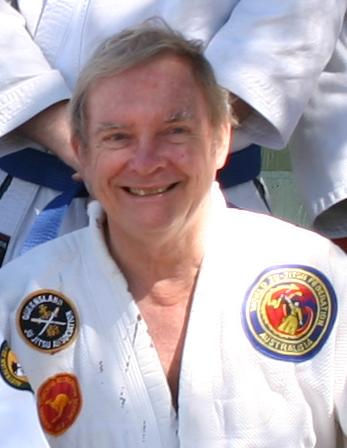
In 2015 Shihan Mike was awarded 8th Degree Black Belt at the National Sydney Seminar and is still training and soon to be 75 years old, he has no thoughts of retiring. He often assists with instructing at the various branch school of Tohkon Ryu Jujitsu and at the national Australian Jujitsu Association Inc. seminar held in Sydney in each year. Shihan Mike is a mentor to many and at a great example of strength. - Sensei Sam Koch

Comments